Maximizing Efficiency and Quality in Custom Plastic Injection Molding
Understanding Custom Plastic Injection Molding
Overview of the Injection Molding Process
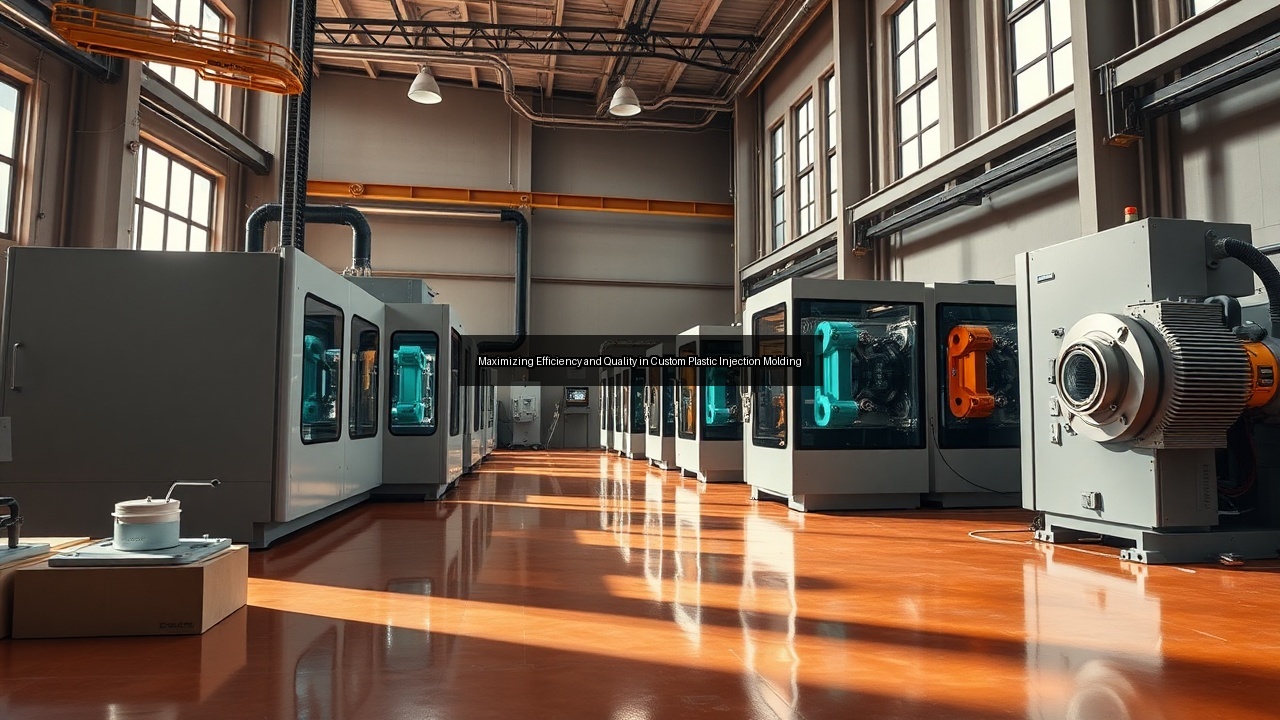
Custom plastic injection molding delivers precise parts through a streamlined injection molding process. Molten thermoplastic flows into a custom mold under high pressure, then cools to form the final shape. This method supports complex geometries that other techniques struggle to achieve. Production runs begin once the injection mold reaches the right temperature and pressure settings. Cycle times often range from seconds to minutes depending on part thickness and material choice. Manufacturers monitor every stage to maintain consistency across thousands of pieces. The process accommodates both small batches and high-volume orders without sacrificing accuracy. Engineers adjust parameters like injection speed and hold time to optimize results. Custom plastic injection molding remains a cornerstone of modern manufacturing because it combines speed with repeatable quality.
Key Materials Used in Custom Plastic Injection Molding
Thermoplastics dominate custom plastic injection molding because they melt and solidify repeatedly without degradation. Common choices include ABS, polycarbonate, nylon, and polypropylene, each offering distinct strength and flexibility profiles. Material selection influences shrinkage rates and surface appearance in the finished part. Additives such as glass fibers or flame retardants enhance performance for demanding applications. Injection molds must withstand the temperatures and pressures these materials require during repeated cycles. Liquid silicone rubber serves specialized needs where elasticity and heat resistance matter most. Proper drying of resins before processing prevents defects like bubbles or weak spots. Companies match material properties to part function to ensure durability in end-use environments. This careful selection drives both efficiency and product reliability in every production run.
Benefits of Custom Plastic Parts
Custom plastic parts produced through injection molding offer tight tolerances and excellent repeatability. Designers achieve intricate details and undercuts that machining alone cannot deliver economically. Lightweight construction reduces shipping costs while maintaining structural integrity. The process supports rapid scaling from prototypes to full production without retooling from scratch. Custom plastic injection molding also minimizes material waste compared with subtractive methods. Parts emerge ready for assembly or with integrated features like threads and snap fits. Consistent quality across batches reduces inspection time and field failures. Manufacturers gain design freedom that supports innovative product development. Overall, the approach balances cost, speed, and performance for industries ranging from automotive to medical devices.
Techniques to Enhance Efficiency
Utilizing Overmolding and Insert Molding
Overmolding combines multiple materials in a single part by molding one polymer over another. This technique creates soft-touch grips or sealed assemblies without secondary bonding steps. Insert molding places metal components or threaded inserts directly into the injection mold before plastic injection. The result is a strong mechanical bond that eliminates separate assembly operations. Both methods reduce labor and improve part integrity in custom plastic injection molding projects. Engineers position inserts precisely to avoid flash or misalignment during the cycle. Overmolding also allows color and texture variations within one component. Production teams achieve higher throughput because fewer handling steps occur after molding. These approaches prove especially valuable when designs call for mixed-material performance in tight spaces.
Implementing CNC Machining in the Molding Process
CNC machining refines injection molds with exceptional precision before production begins. Hardened steel cavities receive final detailing through multi-axis milling and EDM operations. This hybrid workflow ensures the custom mold matches the part geometry exactly. Machining also supports quick modifications when design iterations arise during development. Toolmakers verify dimensions against CAD data to prevent costly errors later. CNC machining of mold components shortens lead times while maintaining tight tolerances required for high-quality injection molded parts. Integration with the overall molding process allows seamless transitions from tool creation to first shots. Manufacturers rely on this accuracy to produce consistent results across long production runs. The combination of CNC precision and injection molding maximizes both efficiency and output quality.
Leveraging 3D Printing for Prototyping
3D printing accelerates prototype development before committing to expensive injection molds. Engineers print functional models in hours to test fit, form, and basic mechanics. This rapid feedback loop identifies design flaws early and reduces revisions to the final tool. Printed prototypes also serve as bridge tools for low-volume validation runs. Material choices in 3D printing now closely mimic production thermoplastics, improving test accuracy. Once the design stabilizes, the same data files transfer directly to mold making. Custom plastic injection molding benefits from this front-end speed because production tooling proceeds with confidence. Teams avoid wasting resources on molds that require major changes. The workflow from 3D printing to full injection molding streamlines the entire product launch timeline.
Ensuring Quality in Injection Mold Production
ISO 9001 Certification and Its Importance
ISO 9001 certification establishes rigorous quality management systems for injection molding operations. Certified facilities document every process step to ensure consistency and traceability. This standard drives continuous improvement through regular audits and corrective actions. Customers gain confidence knowing the supplier maintains strict controls over material handling and equipment calibration. ISO 9001 compliance also supports regulatory requirements in medical and automotive sectors. Injection mold production under this framework minimizes variation between batches. Teams track key metrics such as cycle time and defect rates to maintain performance. The certification signals professional commitment that helps win contracts for demanding custom plastic injection molding projects. Overall, it creates a foundation for reliable, repeatable manufacturing outcomes.
Inspection Techniques for Quality Assurance
Inspection begins with incoming material verification and continues through first-article sampling. Coordinate measuring machines and optical comparators verify critical dimensions against tolerance specifications. In-process checks catch deviations before they affect entire production runs. Visual inspection under controlled lighting reveals surface defects like sink marks or flash. Statistical process control monitors variables such as pressure and temperature to predict quality issues. Custom plastic injection molding demands thorough documentation of every inspection result for traceability. Non-destructive testing methods confirm internal integrity without damaging parts. Regular gage calibration ensures measurement accuracy across all shifts. These layered techniques protect both the manufacturer and the end customer from costly quality escapes.
Surface Finishes and Their Impact on Final Products
Surface finishes directly influence appearance, function, and release characteristics of injection molded parts. Polished cavities produce glossy finishes that enhance consumer products, while textured surfaces improve grip and hide minor defects. Proper finish selection reduces ejection forces and prevents sticking during high-speed cycles. Engineers specify SPI or VDI standards to communicate exact texture requirements to the mold maker. Surface treatments also affect paint adhesion or labeling in later assembly stages. Custom plastic injection molding projects benefit when finishes are considered early in the design phase. Consistent cavity polishing across multi-cavity tools guarantees uniform part appearance. Advanced techniques like chemical etching create complex patterns impossible to achieve through machining alone. Attention to surface quality elevates both performance and perceived value of the finished components.
Cost Considerations in Custom Plastic Injection Molding
Factors Affecting Pricing of Injection Molded Parts
Pricing for injection molded parts depends on part complexity, material volume, and production quantity. Larger parts require bigger molds and longer cycle times, increasing per-unit cost. Multi-cavity tools spread tooling expense across more pieces but raise initial investment. Material selection also plays a major role because specialty resins carry premium prices. Custom plastic injection molding projects often balance these variables through design for manufacturability reviews. Secondary operations such as assembly or decoration add further expense. Lead time requirements influence pricing when expedited tooling becomes necessary. Volume commitments allow suppliers to optimize press scheduling and reduce setup costs. Transparent quoting processes help customers understand each cost driver before production starts.
Cost-Effective Tooling Solutions
Cost-effective tooling begins with selecting the right mold material for expected production volume. Aluminum molds suit short runs and prototypes because they machine quickly and dissipate heat well. Steel molds last longer for high-volume projects and justify higher upfront costs. Family molds that produce multiple part numbers in one cycle reduce per-part tooling expense. Standardized mold bases and hot runner systems further control costs while maintaining quality. Early involvement of mold makers during product design prevents expensive changes later. Custom plastic injection molding benefits when tooling decisions align with both budget and timeline. Maintenance programs extend tool life and protect the initial investment. Strategic tooling choices deliver competitive pricing without compromising part performance.
Understanding the Economics of Prototypes vs. Production Runs
Prototypes through 3D printing or low-volume molding carry higher per-unit costs but accelerate design validation. Production runs leverage amortized tooling to achieve dramatically lower piece prices. The transition point depends on total quantity and acceptable lead time for the custom mold. Bridge production using printed or soft tooling fills the gap while steel molds are completed. Injection molding economics favor higher volumes because setup and material handling costs spread across more parts. Custom plastic injection molding programs often phase quantities to match market demand forecasts. Accurate forecasting prevents over-ordering prototypes or underestimating production needs. Clear cost modeling helps teams choose the optimal manufacturing path for each project stage.
Advanced Customization Options
Incorporating Threaded Inserts and Other Features
Threaded inserts molded directly into parts eliminate secondary tapping operations and provide durable fastening points. Insert placement during the injection cycle creates strong bonds that resist pull-out forces. Designers also integrate living hinges, snap fits, and alignment features that reduce assembly time. These elements must be positioned carefully within the custom mold to avoid interference with material flow. Custom plastic injection molding supports such complexity because the process fills fine details reliably. Proper insert selection ensures compatibility with both the plastic and expected service conditions. Advanced mold designs accommodate multiple insert types in a single shot. The result is fewer components and lower overall assembly costs for the final product.
Utilizing Liquid Silicone Rubber in Molding
Liquid silicone rubber enables flexible, heat-resistant components through specialized injection molding equipment. The material cures rapidly under heat and pressure, producing parts with excellent sealing properties. Overmolding liquid silicone rubber onto rigid substrates creates integrated gaskets or ergonomic grips. Custom plastic injection molding companies increasingly adopt this capability for medical and automotive applications. Precise metering and mixing of the two-part silicone system ensures consistent durometer and color. Mold temperatures and cycle times differ from thermoplastic processing, requiring dedicated presses. The finished parts withstand extreme temperatures and repeated sterilization without degradation. This material expands design possibilities beyond standard rigid plastics.
Exploring Laser Engraving for Custom Designs
Laser engraving adds permanent markings, logos, or serial numbers after the molding cycle. The process works on both plastic surfaces and metal mold components for cavity identification. Custom plastic injection molding benefits from this flexibility because designs can change without new tooling. Precise control of laser settings prevents surface damage while achieving high-contrast results. Engraving also supports traceability requirements in regulated industries. Post-molding application avoids sink marks or flow disruptions that direct engraving in the cavity might cause. Teams combine laser engraving with other finishing steps to deliver fully customized parts. The technique offers speed and cost advantages over traditional pad printing for many applications.
See Also
- Custom Plastic Injection Molding Techniques That Revolutionize Product Design
- How to Choose the Right Custom Injection Molding Partner for Your Projects
- Innovative Surface Finishes for Custom Plastic Injection Molded Products
- The Role of ISO 9001 in Elevating Custom Plastic Injection Molding Standards
- The Future of Manufacturing with Custom Plastic Injection Molding Solutions